

As screens become increasingly central to schoolwork, entertainment and communication, researchers are paying closer attention to the effects of prolonged digital exposure. From homework on Chromebooks to late-night scrolling on phones, many students spend hours each day looking at screens. But the light emitted from those devices, known as blue light, may be affecting more than just screen time totals. Health experts say it can also impact sleep, focus and overall well-being.
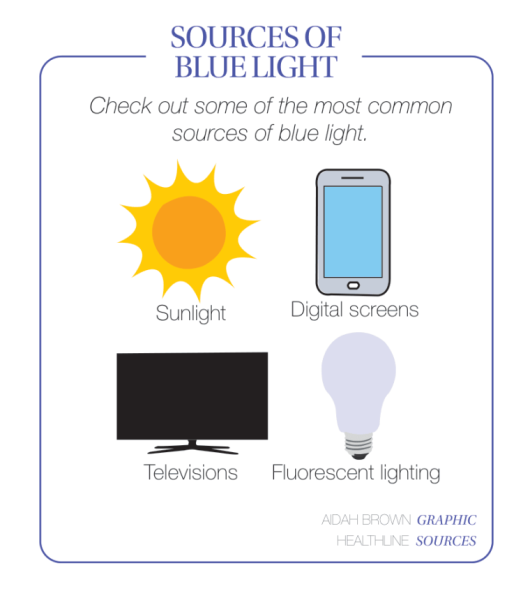
Blue light is a type of light emitted from digital devices like phones, tablets and computers, as well as LED lighting. While exposure to light itself is normal, the increasing amount of screen use in modern life has drawn the attention of health professionals.
“Health professionals are paying attention because of the digital world that we navigate day-to-day,” said health teacher Caleb Hall. “Lots of people are using screens all day long.”
One of the biggest concerns surrounding blue light is its effect on sleep. The body naturally produces a hormone called melatonin that helps regulate sleep cycles. However, blue light exposure, especially at night, can interfere with that process.
“Blue light can interfere with the body’s production of melatonin, causing disruption to sleep cycles,” Hall said.
According to the American Academy of Sleep Medicine, teenagers should get eight to ten hours of sleep each night to support healthy development. However, many adolescents fall short of that recommendation, often due in part to late-night screen use.
Using screens before bed can make falling asleep more difficult. Hall said blue light suppresses melatonin production, making the body feel more alert instead of tired.
“The suppression of melatonin makes our body feel alert and awake, making it difficult to fall asleep,” Hall said.
Poor sleep can have significant consequences for students both academically and emotionally. Hall said fatigue, increased anxiety and difficulty concentrating are common effects of insufficient rest.
“Feelings of fatigue, increased anxiety and reduced ability to concentrate would make cognitive tasks and relationships harder to manage when not getting enough sleep,” Hall said.
Over time, chronic sleep disruption can also contribute to broader health issues.
“Long-term health issues like diabetes and weakened immune systems are also linked to poor sleep,” Hall said.
In addition to sleep disruption, prolonged screen exposure can lead to digital eye strain, a condition characterized by symptoms such as blurred vision, headaches and eye fatigue.
“Fatigue, blurred vision and headaches” are common signs of digital eye strain, Hall said, adding that it is likely fairly common among teenagers due to the amount of time they spend on phones and computers.

Junior Kyle Yang said he spends “around 10 hours a day” looking at screens, primarily on his laptop and phone. Extended screen use sometimes causes mild discomfort.
“Sometimes I notice mild eye strain if I’ve been on a screen for a long time,” Yang said.
Yang also said he feels more tired on nights when he uses his phone later.
“I do feel more tired on nights when I’m on my phone later,” Yang said.
To help reduce the effects of screen exposure, Yang said he often uses the night-mode setting on his devices.
“I usually just use night mode on my devices,” Yang said.
Some people also turn to blue-light-blocking glasses, but their effectiveness remains uncertain. According to Hall, current research offers mixed conclusions.
“Recent studies say that using blue light glasses might help with sleep, and that there has been no evidence that the glasses reduce eye strain,” Hall said. “Currently there are no long-term studies that support them.”
Despite these concerns, Hall emphasizes that technology itself is not the problem. Instead, developing healthy habits around screen use is key.
“Technology isn’t going away, so we have to find ways to be efficient in the time that we are in front of a screen,” Hall said.
For students who cannot avoid screens due to schoolwork, Hall recommends taking regular breaks and practicing good time management. Establishing a consistent nighttime routine can also help the body naturally prepare for sleep.
“We are beings that thrive on routine,” Hall said. “Finding a good nighttime routine that helps you wind down can help your natural melatonin production.”
Ultimately, Hall says consistency plays a major role in healthy sleep habits.
“Develop a good nighttime routine, and try to stick to the same bedtime and wake time as much as you can,” Hall said. “Exercise and nutrition can also play a big role in your sleep habits.”
As technology continues to shape both education and daily life, understanding how digital habits affect sleep and eye health may help students make more informed choices about when and how long they use their screens.